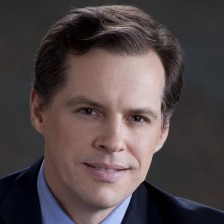
According to the degree of improvement of Social Media Influence (SMI), the winner of the June 26th Democratic Debate was Julian Castro, followed by Tulsi Gabbard.
In order to get some perspective, we have compared the ranking of the performance of candidates at the debate from first to tenth by SMI, on-line surveys, and search.
Table 1: Ranking by Candidate’s Debate Performance by a Variety of Methods
| SMI | Heavy (Survey) | Washington Examiner (Survey) | Google Search, during debate | Google Search, next day | Avg. | |
| Castro | 1 | 3 | 3 | 6 | 3 | 3.2 |
| Gabbard | 2 | 1 | 1 | 2 | 1 | 1.4 |
| Booker | 3 | 4 | 5 | 1 | 5 | 3.6 |
| Warren | 4 | 2 | 2 | 5 | 4 | 3.4 |
| Klobuchar | 5 | 6 | 7 | 9 | 7 | 6.8 |
| Inslee | 6 | 9 | 9 | 7 | 10 | 8.2 |
| O’Rourke | 7 | 5 | 4 | 3 | 2 | 4.2 |
| De Blasio | 8 | 8 | 8 | 4 | 6 | 6.8 |
| Delaney | 9 | 7 | 6 | 10 | 8 | 8.0 |
| Ryan | 10 | 10 | 10 | 8 | 9 | 9.4 |
Source: ZettaCap, Heavy.com, WashingtonExaminer.com, and Google Trends
There are three different types of data in the table. SMI uses social media data. The next two entries, Heavy and Washington Examiner, are on-line surveys asking who won the debate. The last two refer to Google Search popularity during the debate and from 11 am to 3 pm the next day to see how trends might have shifted post-debate when people search to find out more about a candidate.
It is important to highlight that SMI’s rankings are completely independent of the other forms of analysis — and that SMI provides similar yet unique insights. For instance, the top four candidates tend to score well by the various methods. In the debate, Gabbard seems to have been the overall winner when averaging the different methods. Castro truly excelled in SMI terms but was seen as more of a mixed bag when looking at other measures.
As for qualitative (as opposed to the quantitative measures in the table), the left-leaning consensus seems to generally agree on Warren and Castro having done well.
CNN pointed towards Castro, Warren, and Booker as the winners.
Vox highlighted Booker, Warren, Castro, and De Blasio as the winners.
New York Times declared the winners as Warren and Castro.
It should also be noted that though Gabbard performed extremely well looking at the data, her performance was not well supported by analysts. In other words, quantitative data showed she ranked likely first or second but traditional analysts disagreed. This type of divergence is something to watch.
We will need to watch Castro and Gabbard to see if their SMI improvements are sustainable or just blips. To be sure, such surges during the debate and post-debate are often how longer term trends begin.
